
40 years without deck hatches: A technical response to thermal challenges
Why You Will Never Find Deck Hatches on a Catana
In the yachting world, installing large glass hatches above the cabins is standard practice. Yet, over 40 years ago, Catana made a radical choice: to banish them entirely. A 100% seafaring decision based on 4 pillars: safety, simplicity, heat management, and ventilation.
The Thermal Trap of Glass Hatches
Conventional wisdom suggests that an open hatch cools the boat. In reality, plexiglass acts like a greenhouse: it captures, stores, and continuously radiates heat.
At just 20°C (68°F) outside, there is already a 9°C (16°F) difference between the scorching surface of a hatch and the white composite deck. Even when open, the hatch draws in air that has been preheated by its own surface, creating a 4 to 7°C delta inside the cabin. It is no coincidence that so many cruisers end up covering their hatches with canvas covers at anchor!
The Catana Method: Keeping the Heat Out
Instead of trying to flush out heat once it’s already inside, Catana eliminates the problem at the source using passive natural cooling:
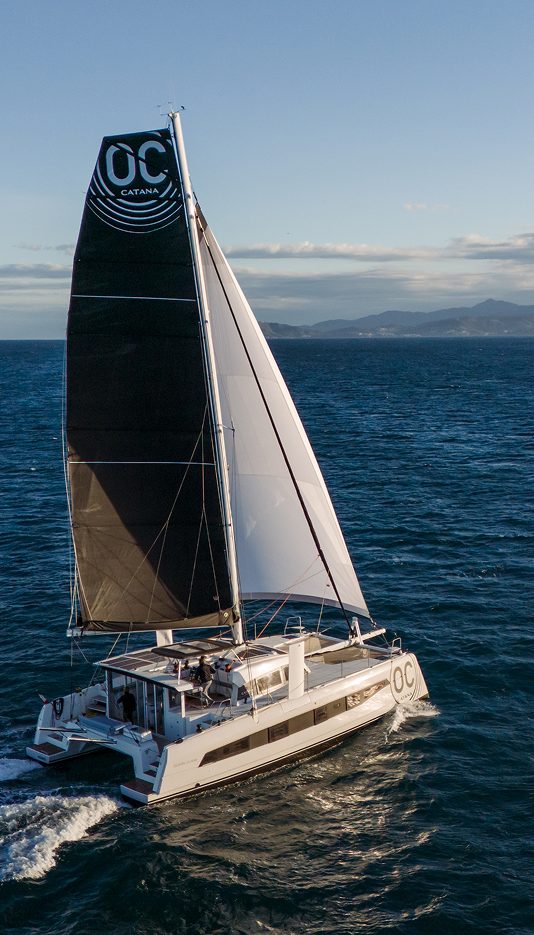
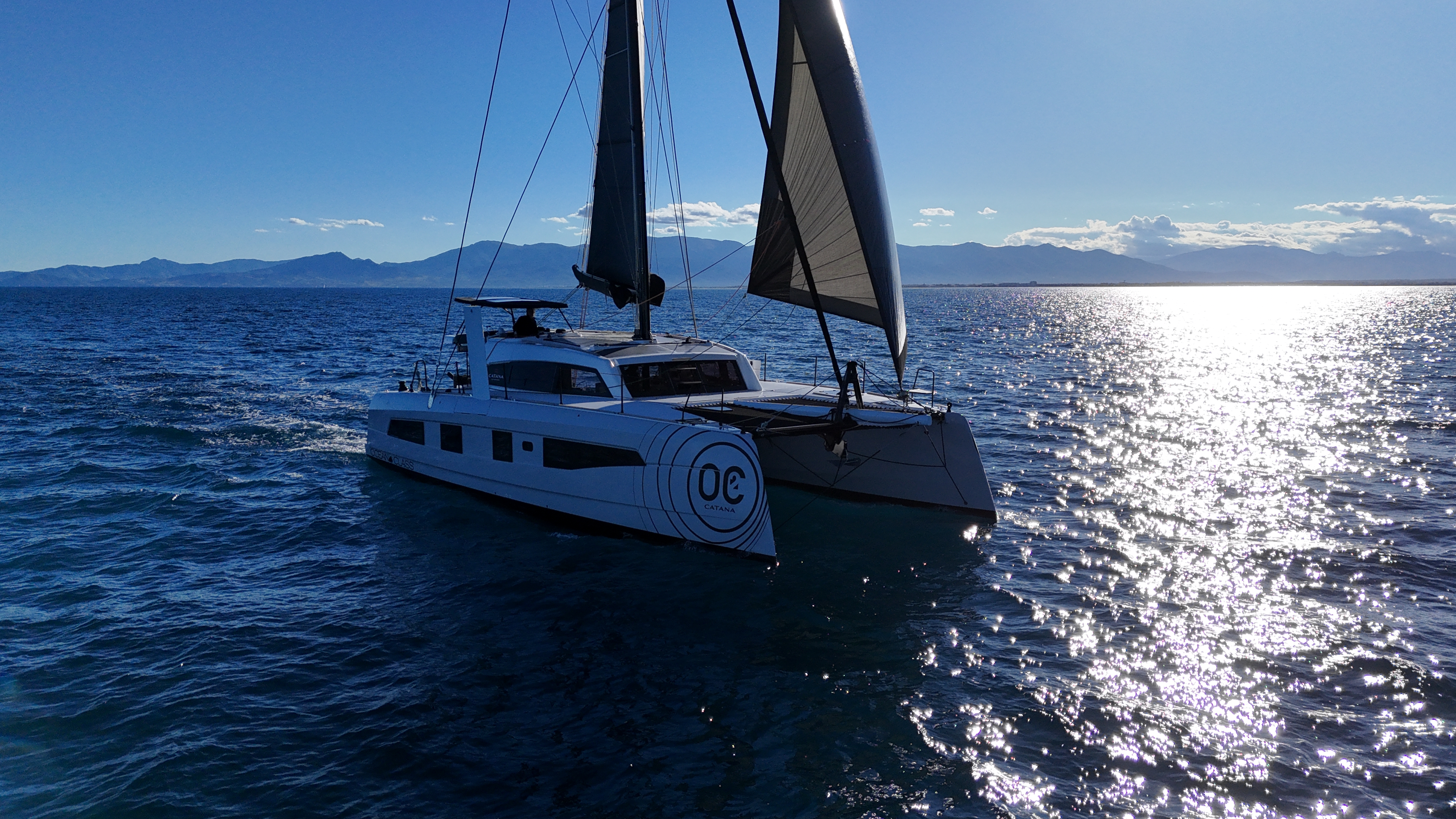
- A Full White Deck: It reflects solar rays to minimize thermal absorption (you can walk on it barefoot without burning yourself).
- Lateral Ventilation: Fresh air is drawn from the sides of the hulls, far from the sun’s direct overhead radiation.
- The Venturi Effect: The design utilizes airflow under and within the bridgedeck to create constant, gentle air circulation throughout the boat.
Safer, Simpler, More Seaworthy
Eliminating these openings also delivers major ergonomic and safety benefits. The deck becomes completely flush (flat): no protruding frames, no tripping hazards, and, above all, zero risk of falling into a hatch left open during a maneuver.
Finally, it guarantees zero water infiltration, whether you are facing a tropical squall or heavy seas. With over 1,200 boats built, Catana proves that true comfort comes from pure nautical common sense.